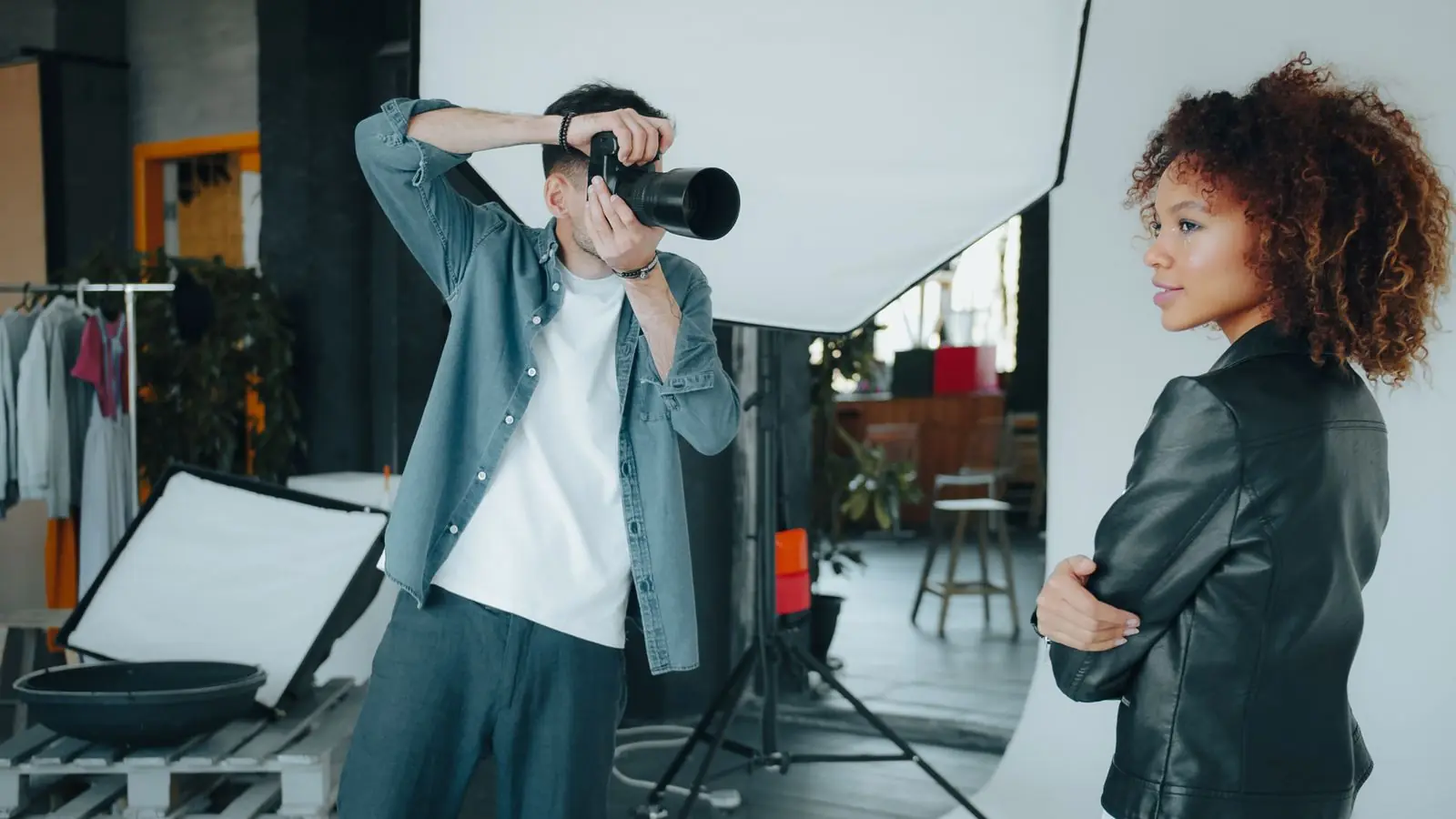
What kind of model could you become?
“Model” covers very different jobs. Before sending a single application, decide where you fit: that choice determines the requirements, the photos you need and who you should contact.
Runway and couture
The most selective segment. Specialist agencies apply precise height and measurement criteria set by fashion houses.
Commercial modelling
Advertising, catalogues, campaigns. Clients look for varied, believable and expressive faces of all ages.
E-commerce model
Product-on-model photos for online shops. Reliability, punctuality and ease in front of the camera matter more than height.
UGC creator
You create videos or photos for a brand yourself, often on a smartphone. Your personality is the main asset.
Many people start with e-commerce or UGC, which have fewer physical requirements and help build a first professional portfolio. That is exactly where Opale Models works, supporting creators and models with or without experience.
Key takeaways
- Strict height criteria mainly concern the runway.
- Commercial, e-commerce and UGC work are open to many body types, ages and styles.
- Choosing a segment stops you sending applications that don’t fit.
What are the real requirements for modelling?
Physical requirements vary from one agency and client to another; there is no single official grid for the whole industry. However, a few qualities come up in every segment:
- Reliability: reply quickly, be on time, warn people when something changes. In e-commerce, a shoot day is a significant cost for a brand.
- Ease in front of the camera: varying poses, staying natural, listening to the photographer’s direction.
- A consistent look: skin, hair and figure close to your photos. Brands choose from your file, so a big gap between photos and reality damages trust.
- A clear style: sport, beauty, streetwear, lifestyle… A readable profile is easier to put forward.
Working in France: the medical certificate
If you work as a model in France, the activity requires a medical certificate. Under article L7123-2-1 of the French Labour Code, it confirms that your overall health, assessed in particular with regard to body mass index, is compatible with the job. Rules differ in other countries, so check local requirements before you travel for work.
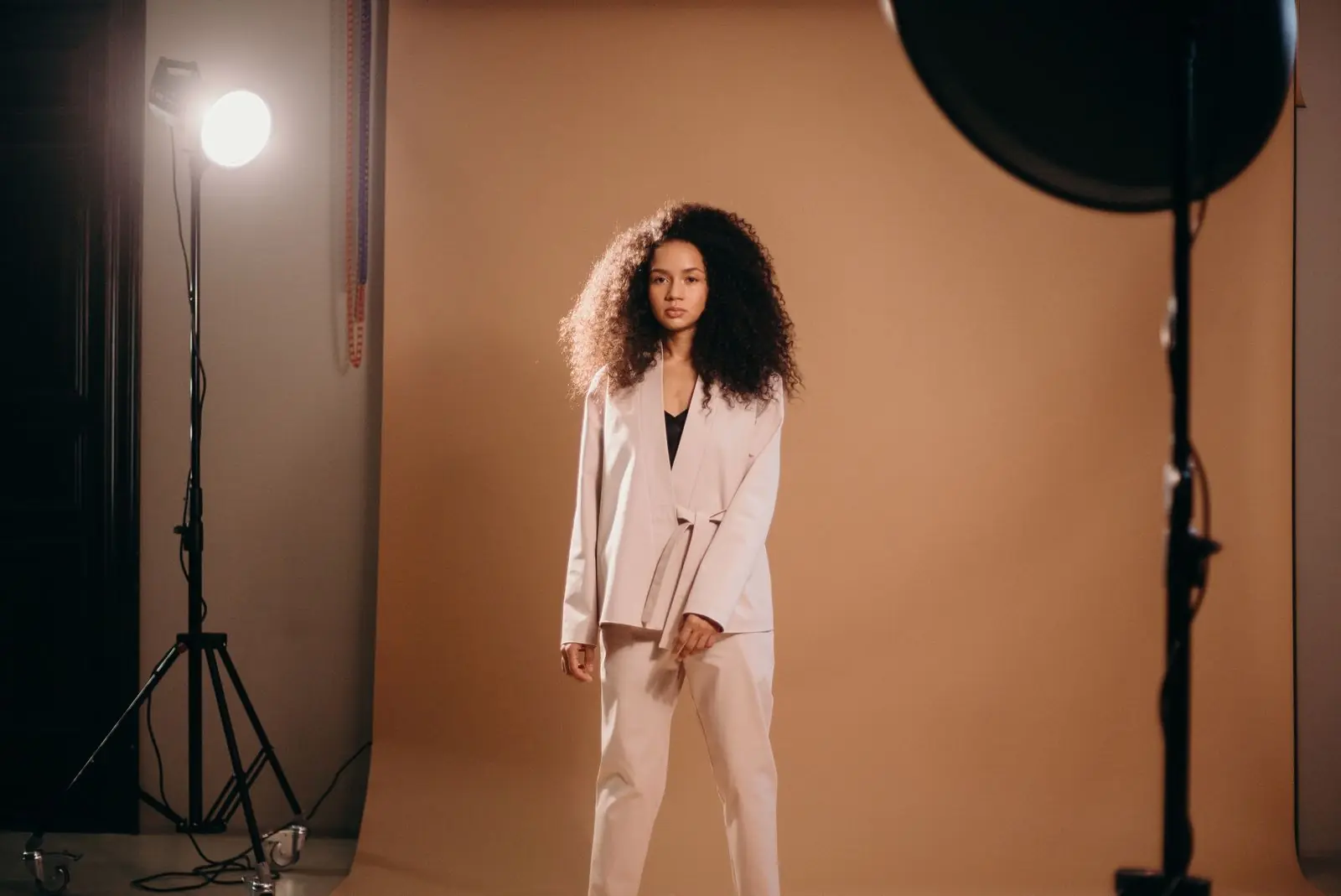
Your first photos (no expensive portfolio needed)
You do not need a costly professional portfolio to apply. Agencies and brands first ask for natural photos, often called polaroids or “digitals”, to see what you really look like.
- DaylightStand facing a window, against a plain, neutral background.
- Simple outfitA fitted top and dark trousers or jeans, with no logos or prints.
- Clear faceVery light make-up or none, hair tied back in at least one shot.
- Four framingsFront headshot, profile headshot, full-length front, full-length profile.
- A short video20 to 30 seconds: your name, city and what attracts you to the work.
For UGC or e-commerce, add two or three examples of content you can produce: a product video shot on your phone, a photo wearing a product. Our guide to building a portfolio brands find useful explains how to select your best examples.
How to handle your first casting
A casting sometimes lasts only a few minutes. The aim is not to impress, but to show that you fit the project and will be easy to work with.
| Do | Avoid |
|---|---|
| Arrive a little early, in simple, clean clothes | Heavy make-up or a busy outfit |
| Listen to the full brief before posing | Repeating stiff poses copied from social media |
| State your availability and city clearly | Promising availability you don’t have |
| Ask about image use, duration and pay | Signing anything you haven’t read |
How to spot a genuine offer
- Check who you are dealing with: company name, address, legal notice, references you can verify.
- Ask for written terms: what is provided, what is not, and what you pay for yourself.
- Be wary of promises: no serious organisation guarantees a contract or income. Work always depends on brands’ choices.
- Protect your images: ask where, for how long and for what purposes your photos will be used.
- Minors: in France, a child under sixteen cannot work as a model without prior individual authorisation from the authorities (article L7124-1).
Your 30-day plan
- Week 1: choose your segment, take your natural photos and short video.
- Week 2: write a three-line introduction (city, languages, style, availability).
- Week 3: find organisations you can verify and send targeted applications.
- Week 4: review the feedback, adjust your photos and keep creating.
Looking for paid collaborations without prior experience?
With Opale Models, a Talent Advisor looks for brands that suit your profile, with no commission and no exclusivity. Submitting your profile is free.
Discover Opale ModelsFrequently asked questions
Can you become a model with no experience?
Yes. Most models started with no experience. Commercial, e-commerce and UGC work welcome beginners, provided they share recent natural photos and are reliable.
Do you have to be tall to be a model?
Height is mainly expected for the runway, according to each agency’s own criteria. For advertising, catalogues, e-commerce or UGC there is no general minimum height.
Do I need to pay for a portfolio to start?
No. Natural photos taken in daylight are enough for a first application. A portfolio builds up over time with real work.
What is the difference between an e-commerce model and a UGC creator?
An e-commerce model poses for product photos taken by the brand or its photographer. A UGC creator produces the content themselves, often as smartphone video, which the brand then uses.
Sources
- French Labour Code, article L7123-2-1 (medical certificate)
- French Labour Code, article L7124-1 (child models)